 How-to
Emergency Garage Door Repair 24/7: What to Do First
Table of Contents
- Emergency Garage Door Repair 24/7: Your First 10 Minutes
- How to Open a Garage Door Manually When It Won't Budge
- Garage Door Opener Emergency Release: How It Works and When to Pull It
- Broken Garage Door Spring Emergency: Why You Stop and Call
- Emergency Garage Door Repair Cost: What Drives the Bill
- How to Verify a 24/7 Provider Before You Book
- When to Call for Emergency Garage Door Repair (and When Not To)
- Frequently Asked Questions
Last Updated: October 18, 2026
Emergency Garage Door Repair 24/7: Your First 10 Minutes
A garage door that fails at 11 p.m. is a security problem before it is a mechanical one. At Garage Door Connection, we take emergency garage door repair 24/7 calls, and the pattern is always the same: the homeowners who stay calm and act in order get their homes secured faster and pay less. This guide walks you through the first ten minutes, the manual override, and how to judge whether you need a technician tonight.
Start with the door itself, not the opener. A door that is fully closed and staying closed is a locked door, even if the motor is dead. A door stuck halfway up is an open invitation. Those are two very different emergencies, and they demand different responses.
Here is the sequence we would follow in our own homes:
- Keep everyone, especially children, away from the door and its tracks.
- Do not force the door up or down by hand while the opener is engaged.
- Look for the obvious: a pulled release cord, an object under the door, a tripped breaker.
- Decide whether the door is secure as it sits.
- Call for service if the door is open, off its tracks, or making a loud cracking sound.
Triage by Symptom: What the Door Is Telling You
The symptom narrows the cause faster than anything else. Use this table before you call anyone, so you can describe the problem accurately and get the right technician dispatched the first time.
| Symptom | Likely Cause | Urgency | Safe Action Now |
|---|---|---|---|
| Loud bang, door won't lift | Broken torsion or extension spring | High | Keep clear, do not force |
| Door crooked or off track | Roller or track damage | High | Stop use, secure area |
| Opener hums, door doesn't move | Stripped gear or dead motor | Medium | Try the release cord |
| Door reverses immediately | Sensor misalignment | Low | Clear and realign sensors |
| Door won't close fully | Obstruction or travel limit | Low | Check for debris first |
| Cable hanging loose | Snapped or slipped cable | High | Do not operate the door |
Most "emergency" calls we handle fall into one of two buckets: a broken spring or a door that has come off its tracks. Both are genuinely dangerous to touch.
How to Open a Garage Door Manually When It Won't Budge
Knowing how to open a garage door manually is the single most useful skill for any homeowner with an automatic door. The manual release disconnects the door from the opener so you can lift it by hand. It is simple, but the order matters.
Find the release cord, usually a red handle hanging from the opener rail. Pull it firmly and straight down, then lift the door by its bottom edge. If the door is balanced, it should rise with modest effort and stay put when you let go.
If it will not lift, stop. A door that resists manual lifting almost always has a broken spring or a bound track, and forcing it can bend panels or drop the door. That is the point where you call for emergency garage door repair rather than muscle through it.
Garage Door Opener Emergency Release: How It Works and When to Pull It
The emergency release is a disconnect, not a repair. Pulling the cord separates the door from the opener's carriage so the door moves freely by hand. It solves a dead motor or a power outage. It does nothing for a broken spring, a snapped cable, or a door off its tracks.
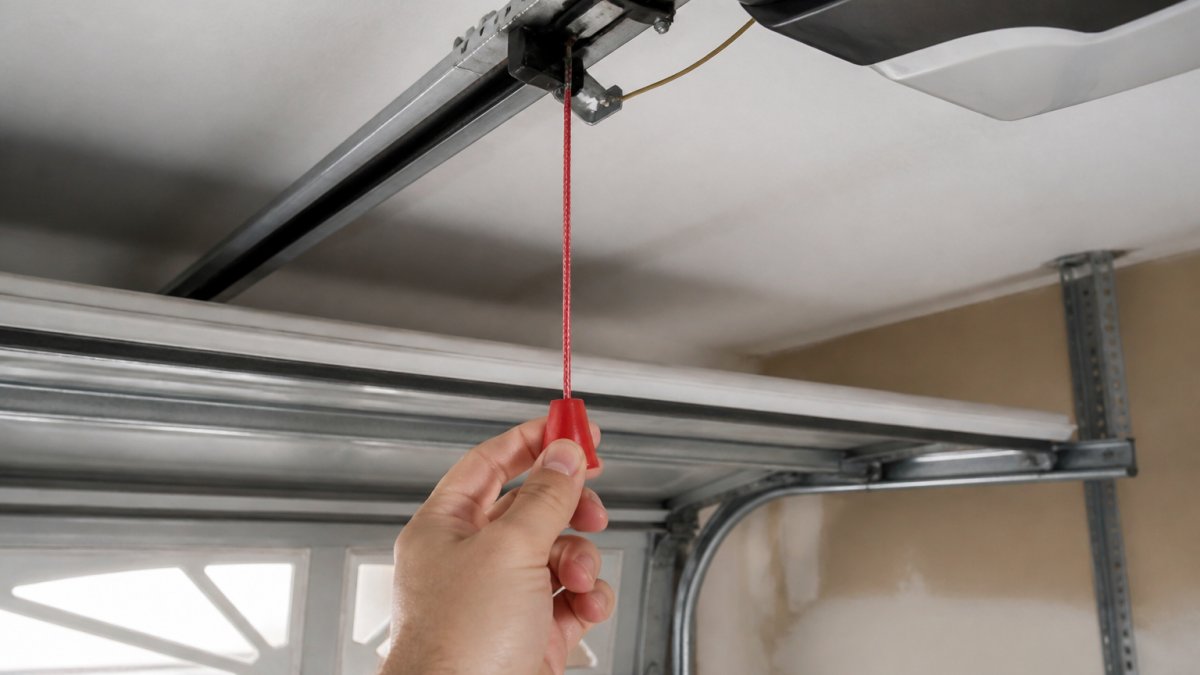
Pull it when the opener has power but will not move the door, or when you need to get a car out during an outage. Do not pull it if the door is crooked, if you heard a bang, or if anything looks loose. Reconnecting is a matter of lifting the door until the carriage clicks back into place, then testing a short cycle.
Broken Garage Door Spring Emergency: Why You Stop and Call
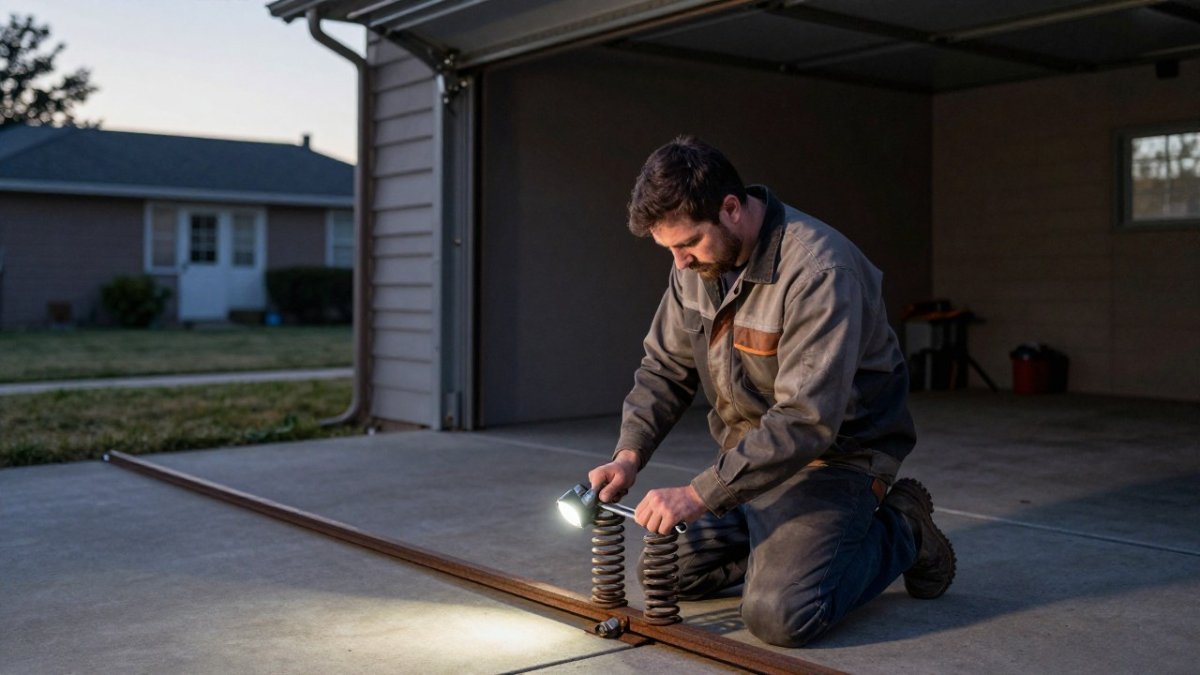
A broken garage door spring emergency is the one call you should never treat as a do-it-yourself project. Torsion springs store enough energy to cause serious injury, and the tools required to wind them safely are not sold at a hardware store. When a spring snaps, you usually hear it: a sharp bang from the garage.
The door may still be closed, held by the remaining spring or by gravity. Leave it that way. Do not try to open it, and do not let anyone park under it. A door running on one spring is unbalanced and can come down hard.
This is where a professional's equipment matters. Our technicians carry the winding bars and containment gear that spring replacement requires, and we inspect the cables, drums, and bearings while we are there.
Emergency Garage Door Repair Cost: What Drives the Bill
Emergency garage door repair cost depends on the part that failed, the door's size and age, and the time of day you call. Most providers structure the bill in three layers: a diagnostic or trip charge, the parts, and the labor.
Here is how the charges typically break down:
- Diagnostic or trip charge. Many companies charge a flat fee to come out and identify the problem, often credited toward the repair if you approve the work.
- After-hours premium. Nights, weekends, and holidays usually carry a higher rate than a weekday appointment.
- Parts. Springs, cables, rollers, and openers vary widely by door weight and size.
- Labor. Spring and cable work takes longer than a sensor adjustment, and rusted or bent hardware adds time.
- Disposal and haul-away. Old springs, cables, and openers sometimes carry a small disposal fee.
A written estimate should list each of those layers separately, not just a single lump sum.
For current rates and a written quote on your specific door, contact our team directly. We will give you the diagnosis and the price in writing before any work begins.
How to Verify a 24/7 Provider Before You Book
Plenty of companies advertise 24/7 service. Here is how to tell the difference before you commit.
- Call the number and time the answer. A live person or a callback within minutes is a good sign.
- Ask for the arrival window in writing. "Soon" is not a window.
- Ask who performs the work. A local technician or a subcontractor from two counties away?
- Ask about the written estimate.
- Check for real reviews and references. Look for recent reviews that describe emergency calls specifically, not just installations.
When to Call for Emergency Garage Door Repair (and When Not To)
Not every garage door problem is an emergency. Use this decision guide to sort the problem by symptom and urgency before you pick up the phone.
Call for emergency service tonight when:
- The door is stuck open and will not close. Your home is unsecured, and that is a security problem first.
- The door is off its tracks or hanging crooked. Operating it can bend panels or drop the door.
- You heard a loud bang and the door will not lift. That is almost always a broken spring, and the door is under stored tension.
- A cable is hanging loose or frayed. Do not run the opener; a snapped cable can whip.
- The door is partially open and will not move in either direction. It may be bound on a track or a broken spring.
Wait for a scheduled daytime visit when:
- The door still opens and closes smoothly but the opener hums or hesitates.
- A remote or keypad is finicky but the wall switch works.
- The safety sensors need realignment and the door otherwise operates.
- You want a tune-up, lubrication, or a balance check.
Safe things to try yourself first:
- Check the breaker or GFCI outlet that feeds the opener.
- Clear obstructions from the photo-eye sensors and wipe the lenses.
- Replace the remote batteries and re-pair the remote if needed.
- Confirm the wall switch works, if it does, the problem is likely the remote or the receiver, not the motor.
If none of that solves it, you have done your triage and you know exactly what to tell the dispatcher.
One last point on DIY. Replacing a sensor, a remote battery, or a light bulb is fine. Winding a spring, restringing a cable, or straightening a bent track is not. The line is simple: if the repair involves stored tension or the door's weight, stop and call. A door that is closed and staying closed is a locked door, even if the motor is dead, that can usually wait for morning. A door that is open and will not close is the one that cannot.
Frequently Asked Questions
How quickly can an emergency garage door technician arrive?
Arrival time depends on your location and the time of day, so ask for a specific window when you call rather than accepting a vague "soon." A provider with real 24/7 coverage dispatches technicians on nights and holidays, not just during business hours. Confirm the dispatch time in writing or by text before you hang up. If a door is stuck open and your home is exposed, say so on the call so the dispatcher can prioritize it.
Is it safe to use a garage door with a broken spring?
No. A torsion or extension spring counterbalances the door's weight, which can run several hundred pounds. With a broken spring, the opener or a person is lifting that full weight, and the door can slam down without warning. Stop using the door, keep people and pets clear, and do not try to open it by hand. A broken garage door spring emergency needs a technician with proper winding bars and clamping tools, because the spring system stays under extreme tension even after it snaps.
What should I ask before booking a 24/7 garage door repair?
Ask four things: whether the technician is dispatched tonight or the next business day, whether the repair estimate will be written before work starts, and whether the company stocks common parts like springs, cables, and rollers on the truck. Also ask if the technician is insured and whether the spring replacement carries a warranty.
Can I fix my own garage door in an emergency?
Some issues are safe to handle yourself: a power outage, a tripped breaker, a misaligned photo-eye, or a remote with dead batteries. Spring, cable, and off-track repairs are not. Torsion springs store enough energy to cause serious injury, and cables under tension can snap. If the door is crooked, hanging from one side, or has a snapped spring, call a professional. For everything else, the garage door opener emergency release lets you open the door by hand until a technician arrives.
A failed garage door is a security and safety problem, and guessing at the fix can make it worse. Garage Door Connection provides rapid 24/7 emergency repair, safe spring replacement with specialized equipment, and opener technology with smartphone control and battery backup, all built for Colorado's temperature swings. Our team gives you honest communication and a written estimate before work begins. Get a free quote from Garage Door Connection and get your door operating smoothly again.