 How-to
Garage Door Spring Repair Cost: Colorado Pricing Guide
Last Updated: October 23, 2026
Quick Summary
Garage door spring repair cost in Colorado varies based on spring type, door size, and labor rates across regions, with torsion springs costing more than extension springs and double-car doors requiring more expensive parts and labor than single-car setups. Parts typically account for 30 to 40 percent of the total bill, while labor represents 50 to 60 percent, reflecting the specialized expertise and safety requirements involved.
- Most residential garage door springs last between 7 and 12 years, rated for 10,000 to 15,000 cycles before failure.
- Torsion springs cost more upfront than extension springs but often last longer and require fewer adjustments.
- When one spring fails, replacing both springs at once is recommended for doors over 5 years old to prevent imminent second failure.
- Service call fees range from free to around $50 to $100, with emergency calls outside business hours carrying premium rates.
- Request an itemized quote breaking down parts, labor, travel, and additional repairs to compare contractors fairly.
Table of Contents
- What Affects Garage Door Spring Repair Cost
- Garage Door Spring Replacement Cost Breakdown
- Torsion Spring vs. Extension Spring Replacement
- How Long Do Garage Door Springs Last
- Single-Car vs. Double-Car Door Pricing
- Labor and Material Costs in Colorado
- Replacing One Spring vs. Both Springs
- Additional Repairs: Cables and Other Components
- Frequently Asked Questions
What Affects Garage Door Spring Repair Cost
Garage door spring repair cost in Colorado varies dramatically depending on the type of spring, the size of your door, and whether you're replacing one or both springs.
The most significant cost driver is the spring type itself. Torsion springs, which sit above the door and twist to lift it, cost more to replace than extension springs, which run along the sides. This isn't just about parts, it's about the specialized equipment and expertise required.
Door size matters too. A single-car door weighs around 300 to 400 pounds, while a double-car door can exceed 800 pounds. Heavier doors need stronger springs, which cost more. Most springs cycle 10,000 to 15,000 times before failure, typically 7 to 12 years depending on use.
Colorado's climate adds another layer. Temperature swings between winter freezes and spring thaws stress metal components, so springs that perform fine elsewhere can fail faster here. Humidity and dust in certain regions accelerate wear, which helps explain why a spring replacement in Bennett might differ from one in Fort Collins.
Garage Door Spring Replacement Cost Breakdown
A complete garage door spring replacement cost in Colorado includes parts, labor, and sometimes additional repairs. Breaking down each component helps you evaluate quotes fairly.
Parts typically account for 30 to 40 percent of the total bill. A single torsion spring costs less than two, and commercial-grade springs cost more than residential ones. Extension springs are cheaper than torsion springs because they're simpler to manufacture and install.
Labor usually represents 50 to 60 percent of your bill. Spring replacement is genuinely dangerous, a spring under extreme tension can cause serious injury if handled incorrectly.
Service call fees sometimes appear separately, ranging from a flat charge to being waived if you proceed with the repair. Travel time to your location, whether you're in Denver, Broomfield, or the eastern plains, affects the final price.
Additional repairs often surface during inspection. Worn cables, a misaligned door, or a failing opener might need attention while the technician is there, and addressing these immediately prevents future breakdowns.
Torsion Spring vs. Extension Spring Replacement
Torsion springs and extension springs work differently, cost differently, and require different expertise to replace safely. Your door was designed with one type, but understanding the difference explains why your repair quote looks the way it does.
Torsion Spring Replacement Costs and Considerations
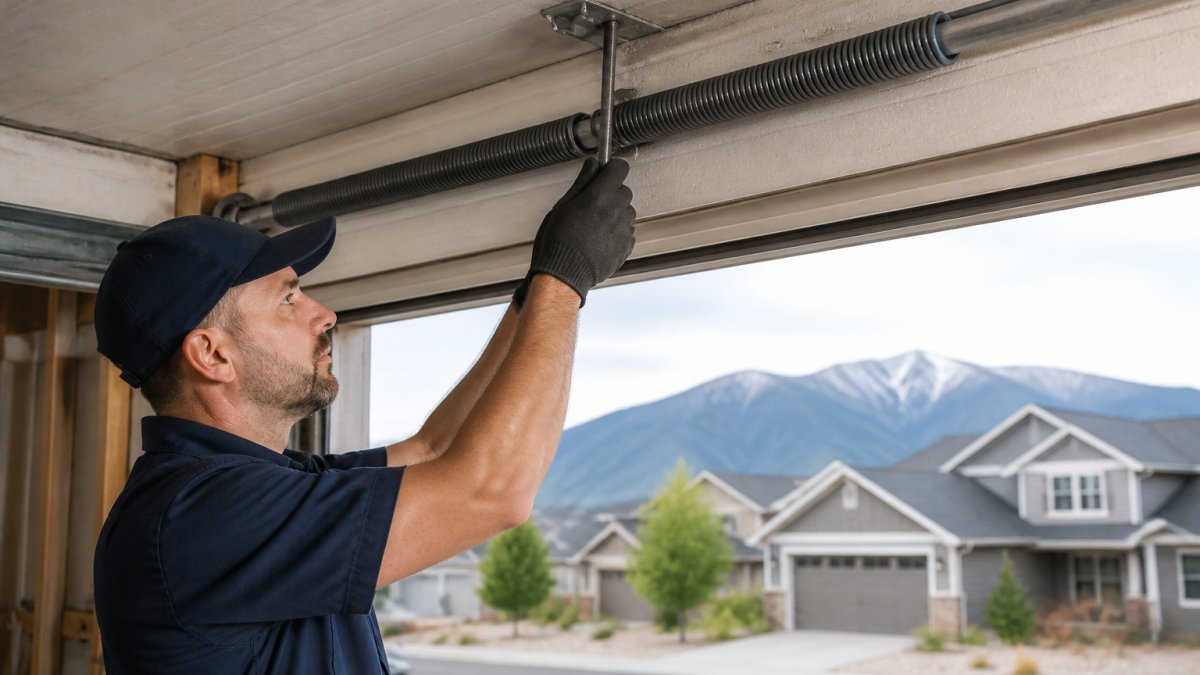
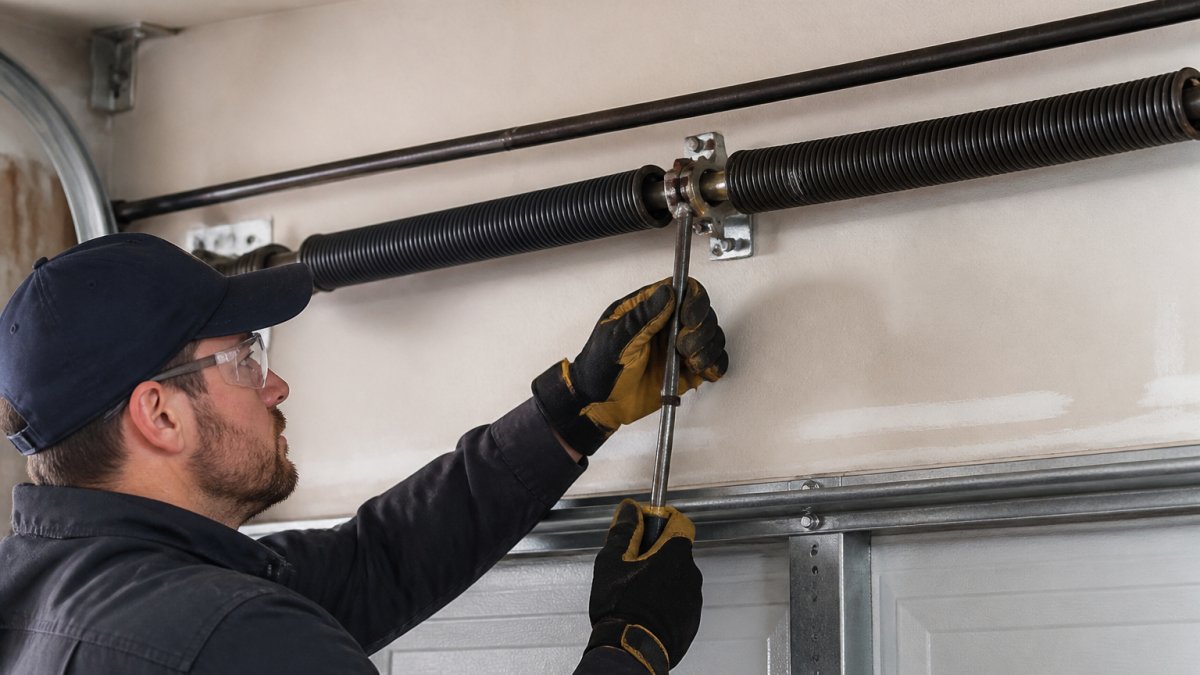
A torsion spring sits horizontally above your garage door and twists to lift the door. When you open the door, the spring winds tighter, storing energy; when you close it, the spring unwinds, lowering the door. This design is efficient and precise, but requires specialized knowledge to replace.
Garage door torsion spring replacement involves high tension and precise measurements. The spring must be wound to exact specifications, too loose and the door won't open, too tight and the door slams shut.
Torsion springs typically cost more upfront than extension springs because they're engineered for durability and precision, but they often last longer and require fewer adjustments. A professional garage door spring replacement cost for torsion springs reflects the higher skill level and equipment involved. Single-car doors use one spring; double-car doors use two.
Extension Spring Replacement Costs and Considerations
Extension springs run along the sides of your garage door opening, parallel to the horizontal tracks, stretching and contracting to lift and lower the door. This design is simpler than torsion springs and generally cheaper to replace because less specialized equipment is needed.
A garage door extension spring replacement cost in Colorado is typically lower than torsion spring work because installation is more straightforward. However, extension springs wear faster, require more frequent adjustment, and can snap suddenly when they break, which is dangerous.
Extension springs usually come in pairs. If one breaks, the other is likely near the end of its life too, so replacing both at once prevents a second failure weeks later. Labor time is shorter than torsion spring work, and the parts are often cheaper, though you may need service calls sooner.
How Long Do Garage Door Springs Last
Most residential garage door springs last between 7 and 12 years, though this varies based on use, climate, and maintenance.
Springs cycle every time you open and close your door, and a typical spring is rated for 10,000 to 15,000 cycles. If your family opens the door twice daily, that's about 730 cycles per year, so a 10,000-cycle spring lasts roughly 14 years. Heavier use shortens lifespan; light use extends it.
Colorado's climate affects spring durability. Temperature swings stress metal as springs contract in winter cold and expand in spring warmth, accelerating wear. Humidity and dust in certain areas also matter.
Regular maintenance extends spring life. Lubricating springs and tracks reduces friction and wear, and inspecting for rust or damage catches problems early. A technician can assess spring health during routine maintenance and warn you when replacement is approaching.
When a spring fails, it usually happens suddenly: you'll hear a loud snap or bang, and your door won't open. Replacing springs before they break is cheaper and less disruptive than dealing with an emergency.
Single-Car vs. Double-Car Door Pricing
Single-car and double-car garage doors have different weights and spring requirements, which directly affects garage door spring repair cost in Colorado.
A single-car door typically weighs 300 to 400 pounds and uses one torsion spring or two extension springs. Replacement is straightforward: one spring, one job.
A double-car door weighs 600 to 900 pounds, sometimes more, and requires either two torsion springs or four extension springs. The heavier load demands stronger, more durable springs, so parts cost more and labor time increases.
If you have a double-car door, expect to pay significantly more for spring replacement than a single-car owner, since you're paying for extra parts plus the added complexity and risk.
Some homeowners with double-car doors ask whether they can replace just the springs on one side. This rarely makes sense, since both springs age similarly and replacing one while the other is near failure guarantees a second emergency call soon.
Labor and Material Costs in Colorado
Labor rates in Colorado vary by region and contractor. Denver-metro technicians typically charge more than those serving rural areas, reflecting higher overhead and demand. A technician in Bennett or Aurora may charge differently than one in Fort Collins or the western slope.
Material costs are more stable. A torsion spring costs roughly the same whether you buy it in Denver or Broomfield, though shipping and handling fees vary. Extension springs are cheaper than torsion springs across the board. Commercial-grade springs cost more than residential ones.
Service call fees range from free (waived if you book the repair) to a flat charge of around $50 to $100. Some contractors include travel time in their hourly rate; others charge separately. Emergency calls, nights, weekends, holidays, typically carry a surcharge.
Getting multiple quotes is essential. Call three contractors, describe your situation clearly (single or double-car, torsion or extension, emergency or routine), and compare their itemized quotes. Garage Door Connection provides free estimates so you can make an informed decision without pressure.
Replacing One Spring vs. Both Springs
When one spring fails, homeowners often ask whether they must replace both. The answer depends on spring type and the age of the door.
If you have torsion springs (one or two, depending on door size), both are the same age and under the same stress. When one fails, the other is typically near failure too. Replacing just one means you'll likely need service again within weeks or months. Most professionals recommend replacing both torsion springs at once, even if only one is broken. This costs more upfront but saves money and hassle long-term.
Extension springs work similarly. If you have four extension springs (double-car door) and one breaks, the others are aging in parallel. Replacing all four prevents future emergencies.
The exception is if your door is very new. If a spring failed prematurely due to a defect, the other springs might have significant life left. A technician can assess this during inspection. But for most residential doors over 5 years old, replacing all springs at once is the smarter choice.
| Scenario | Recommendation | Why |
|---|---|---|
| One torsion spring broken, door 8+ years old | Replace both | Both are near end of life |
| One extension spring broken, door 10+ years old | Replace all springs | All springs are aging together |
| One spring broken, door less than 3 years old | May replace one | Other springs may have longer life |
| Emergency call with no prior issues | Replace all springs | Prevents imminent second failure |
Additional Repairs: Cables and Other Components
When a spring breaks, other components often need attention. Garage door cables, pulleys, and the opener itself may require service while the technician is there.
Cables run alongside springs and support the door's weight. When a spring fails, the cable may snap or fray.
Pulleys guide the cables and can wear out over time. If a pulley is damaged, the technician will recommend replacement. Worn pulleys create noise and friction, reducing the door's lifespan.
The garage door opener, the motor that powers the door, sometimes needs adjustment or repair after spring replacement. If the door has been stuck or operating under stress, the opener may have worked harder than normal.
Hinges, rollers, and tracks may also show wear. A comprehensive inspection during spring replacement catches these issues before they become expensive problems. Addressing them now prevents future breakdowns and extends your door's life.
When your garage door spring breaks, you need a technician who understands Colorado conditions and responds fast.
Frequently Asked Questions
How much does a garage door spring replacement cost?
Garage door spring replacement costs depend on the spring type, door size, and whether you're replacing one or both springs. Torsion springs typically cost more than extension springs due to their complexity. Labor and material costs vary by location and contractor. Contact a local professional for a free estimate to get accurate pricing for your specific situation.
How long do garage door springs last?
Most garage door springs are rated for 10,000 to 20,000 cycles, which typically translates to 7-12 years of typical residential use. Springs in Colorado may experience faster wear due to temperature fluctuations and climate stress. Regular maintenance and inspection can help extend spring lifespan and catch problems before they become expensive repairs.
Should I replace both garage door springs at the same time?
If one spring has failed, replacing both springs is often recommended. Springs age similarly, so the second spring will likely fail soon after. Replacing both at once saves on service calls and labor costs in the long run, plus ensures balanced door operation and safer performance.
What factors affect the cost of garage door spring repair?
Key cost factors include spring type (torsion vs. extension), door size (single-car vs. double-car), whether additional repairs are needed (cables, hinges, rollers), local labor rates, and service timing (emergency calls cost more). Spring size and weight capacity also influence pricing. A professional inspection will identify all needed repairs for an accurate quote.