 Comparison
Is a Garage Door Spring Replacement Guarantee Worth It?
Last Updated: November 2, 2026
Quick Summary
A spring replacement guarantee is a written promise covering some combination of the replacement spring, the labor to install it, and the installer's workmanship. Parts, labor and workmanship are three separate promises, so ask which each guarantee covers before signing. A guarantee covering parts but not labor still leaves you paying for the service call.
- A lifetime warranty usually means the part's expected service life, not yours.
- Manufacturer warranties are usually limited and rarely pay labor, shipping or incidental costs.
- The installer's labor warranty determines whether a warranty service call costs you anything.
- A 10-year parts warranty with a 90-day labor warranty leaves you paying for the visit in year two.
- A DIY spring repair is dangerous and typically voids the warranty at the same time.
Table of Contents
- What a Garage Door Spring Replacement Guarantee Actually Covers
- Garage Door Spring Warranty Coverage: Manufacturer vs. Installer
- How Long Do Garage Door Springs Last?
- Garage Door Spring Replacement Cost and What Drives It
- Garage Door Repair Labor Warranty: What to Expect from the Installer
- Warranty Exclusions and Claim Requirements in Plain Language
- A Practical Checklist for Comparing Replacement Guarantees
- Get a Free Quote from Garage Door Connection
- Frequently Asked Questions
What a Garage Door Spring Replacement Guarantee Actually Covers
A garage door spring replacement guarantee is a written promise that covers some combination of the replacement spring itself, the labor to install it, and the installer's workmanship. Most homeowners assume "guarantee" means everything is covered. That assumption is where disputes start.
Below, we break down each coverage type and how to compare two guarantees that look identical but aren't.
Parts, Labor, and Workmanship: Three Separate Promises
A spring replacement guarantee is three promises stacked together, each with its own length and conditions.
- Parts coverage pays for the replacement spring itself if it fails, usually tied to the spring manufacturer's warranty, not the installer.
- Labor coverage pays for someone to return and install the replacement, the piece homeowners care about most, and the one most often excluded.
- Workmanship coverage covers installation errors: wrong spring size, improper tension, or a door left out of balance. This comes from the installer, not the manufacturer.
A guarantee covering parts but not labor still leaves you paying for the service call. Ask which of the three each promise covers before signing.
Why the Headline Duration Is Not the Whole Story
A "lifetime warranty" sounds absolute, but lifetime usually means the part's expected service life, not yours. Exceed the rated cycles and the warranty is typically done.
Garage Door Spring Warranty Coverage: Manufacturer vs. Installer
Garage door spring warranty coverage splits into two tracks: the manufacturer warrants the spring as a product, and the installer warrants the installation and labor. Different parties, durations, exclusions, and claim processes. When a spring fails, the first question isn't "is it covered?" but "covered by whom, and for what?"
What the Manufacturer Warrants
The manufacturer's warranty is a product warranty. It speaks to the spring as a manufactured item: the steel, the coil, the rated cycle life.
Manufacturers such as C.H.I. Overhead Doors and Raynor publish limited lifetime section warranties that name hardware and spring terms in their coverage documents, according to C.H.I. Overhead Doors' after-sales support comparison.
Manufacturer warranties are usually limited, not full: the manufacturer replaces the defective part, often prorated after an initial period, but won't pay labor, shipping, or incidental costs.
What the Installer Warrants
The installer's warranty is a workmanship and labor warranty covering the installation: correct spring size, proper tension, door balance, hardware torqued to spec. It also typically covers the labor to return and replace a spring that fails within a stated period.
This is the piece homeowners care about most, because it determines whether a warranty service call costs them anything.
Where the Two Tracks Overlap and Where They Don't
The manufacturer is responsible for the spring being defective, the installer for it being installed wrong. Most failures fall into one of those buckets, and the paperwork should say which party owns which.
| Failure Scenario | Likely Responsible Party | What to Check |
|---|---|---|
| Spring snaps well below its rated cycle count | Manufacturer (defect) | Cycle rating, proof of purchase, prorating terms |
| Spring fails shortly after installation | Installer (workmanship or sizing) | Labor warranty duration, installation invoice |
| Spring fails after rated cycles are exceeded | Neither (normal wear) | Cycle count vs. household usage |
| Spring fails due to corrosion or neglect | Neither (excluded) | Maintenance requirements, exclusion list |
| Wrong spring size installed | Installer (workmanship) | Written workmanship terms, inspection record |
How to Evaluate a Guarantee Beyond Its Headline Duration
A "lifetime" or "10-year" headline is the least useful number on the page. Four factors determine what the guarantee is actually worth:
- Cycle rating of the replacement spring. A warranty matching a 10,000-cycle spring to a busy household is worth less than one matching a 30,000-cycle spring to the same door.
- Prorating. After the initial period, a replacement spring may be discounted rather than free, and labor is almost always excluded.
- Transferability. Some warranties transfer to a new homeowner if the home is sold; many do not.
A guarantee worth having answers all four in writing. If an installer can only quote the headline duration, treat the rest as marketing.
How Long Do Garage Door Springs Last?
Garage door springs are rated by cycles, not years. A cycle is one full open and close.
Several factors shorten spring life:
- Daily door use: more cycles, shorter life
- Spring size and rate: undersized springs work harder and fail sooner
- Corrosion: moisture and road salt attack the steel
A failing spring often announces itself: the door feels heavy, opens unevenly, or a gap appears in the coil. Catching those signs early is cheaper than waiting for a snap. See our guide to common garage door spring issues.
Garage Door Spring Replacement Cost and What Drives It
Spring replacement cost depends on the spring type, the door's weight, the number of springs, and whether the call is an emergency. For local pricing detail, see our Colorado spring repair pricing guide.
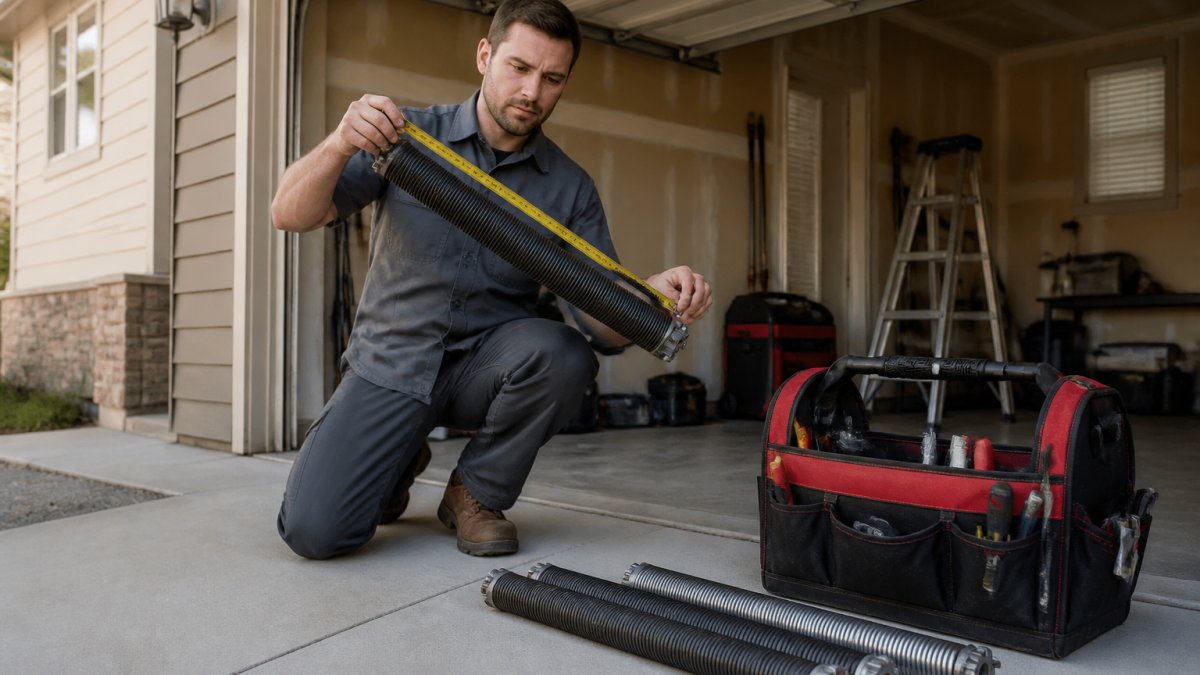
Pricing depends on several factors. Here's what moves the number:
- Spring type: torsion springs generally cost more than extension springs
- Spring count: most doors use two, and both should be replaced together
- Door weight and size: heavier doors need heavier springs
Garage Door Repair Labor Warranty: What to Expect from the Installer
A garage door repair labor warranty is the installer's promise to stand behind the work. It typically covers a return visit if the spring fails due to an installation error, and usually runs shorter than the manufacturer's parts warranty.
What to expect from a reputable installer:
- A written labor warranty with a clear duration
- Coverage for installation errors such as wrong spring size or improper tension
- A clear definition of what counts as a defect versus normal wear
Ask for the labor terms in writing before the technician starts.
Warranty Exclusions and Claim Requirements in Plain Language
Warranty exclusions are the conditions that void coverage, and they're usually buried in the fine print. Here's what commonly appears in plain language:
- Improper use: forcing a stuck door or running it with a broken spring
- Unauthorized repairs: DIY fixes or work by an unqualified contractor
- Lack of maintenance: skipping lubrication or balance checks
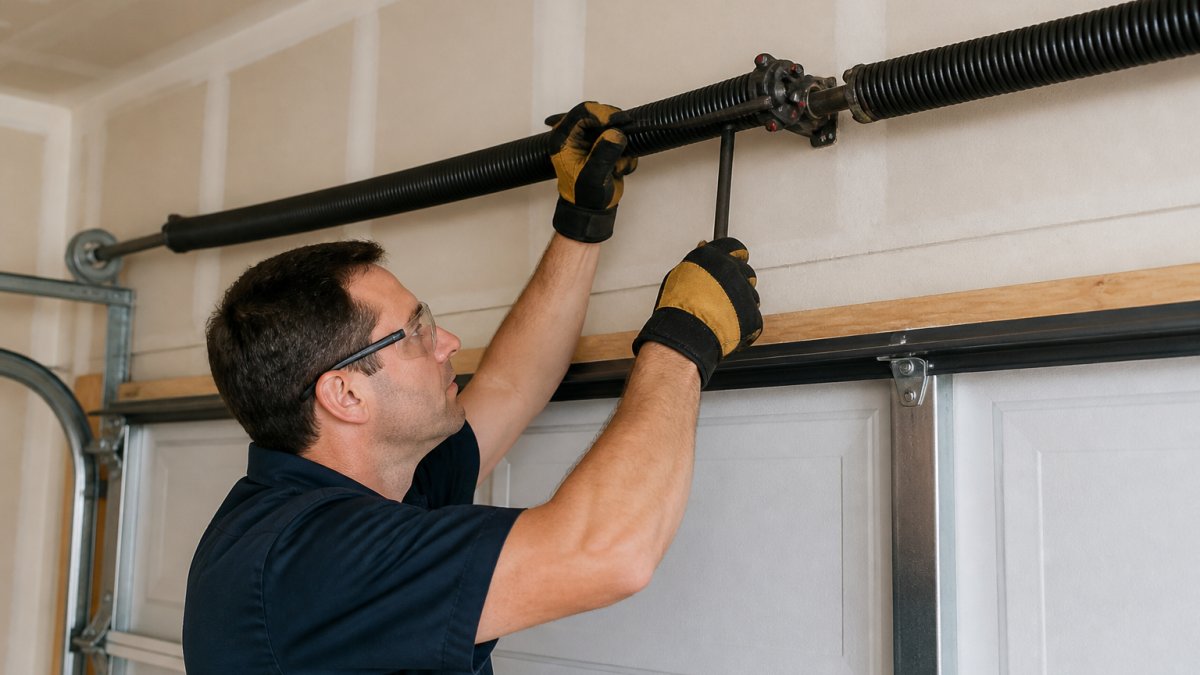
Watch out: a DIY spring repair is dangerous and typically voids the warranty at the same time. Our article on the dangers of DIY garage door spring repair explains why this work belongs to a trained technician.
Claim requirements usually include proof of purchase, the original installation date, and a description of the failure. Keep your invoice and warranty documents in one place. When a spring fails, call the installer before touching anything.
A Practical Checklist for Comparing Replacement Guarantees
Comparing two guarantees side by side is the fastest way past the headline. What matters is what's covered, by whom, for how long, under what conditions, and what remedy you get.
Use the checklist below as a decision tool, not just a list. For each item, write down what each installer's paperwork actually says. Where an installer cannot answer in writing, mark it as a gap.
The Comparison Checklist
- Parts coverage: Does the guarantee cover the replacement spring itself, and for how long?
- Labor coverage: Does it cover the technician's return visit, and for how long?
- Workmanship coverage: Does it cover installation errors such as wrong spring size or improper tension?
How the Three Coverage Types Stack Up
Here is how parts, labor, and workmanship coverage typically differ in who provides them, what they focus on, and what you should confirm before signing.
| Coverage Type | Who Provides It | Typical Focus | What to Confirm |
|---|---|---|---|
| Parts | Spring manufacturer | The spring as a product | Cycle rating, prorating, exclusions, proof of purchase |
| Labor | Installing company | The return visit | Duration, what counts as a defect, who pays service charges |
| Workmanship | Installing company | Installation quality | Written terms, transferability, inspection record |
How to Weigh the Trade-Offs
A longer parts warranty isn't automatically better. A 10-year parts warranty paired with a 90-day labor warranty leaves you paying for the visit in year two. A shorter parts warranty with a two-year labor and workmanship guarantee may be worth more, because labor is the cost that surprises homeowners.
A practical way to compare two offers:
- Start with labor and workmanship. These determine whether a warranty service call costs you anything, compare their durations first.
- Then compare parts coverage and prorating. Full coverage for the first year is common; prorating after that is normal.
- Check the cycle rating against your use. A warranty on a 10,000-cycle spring is worth less to a household running 2,000 cycles a year than one on a 30,000-cycle spring.
- Confirm the remedy. "Part only" and "part and labor" are different products. Price the difference before comparing headline durations.
- Read the exclusions last, and twice. Exclusions are where most claims die. If the list is broad enough to cover normal wear, the guarantee is largely decorative.
Get a Free Quote from Garage Door Connection
Reading a guarantee is one thing. Finding an installer who stands behind the work is another. At Garage Door Connection, we replace springs using specialized equipment.
We offer rapid 24/7 emergency repair response and advanced opener technology with smartphone control and battery backups.
Ready to stop guessing about coverage? Request a spring replacement quote to get started. If you'd rather talk it through first, contact our team and we'll walk you through the options.
Frequently Asked Questions
How long do garage door torsion springs typically last?
Torsion springs are rated in cycles, not years. Torsion springs are rated by cycles, and the cycle rating of any replacement spring should be confirmed before you approve the work. Climate, door weight, and correct installation all affect real-world life, so ask for the cycle rating on any replacement spring before you approve the work.
Does a garage door spring warranty cover labor and parts?
It depends on who issues the warranty. Manufacturer spring warranties usually cover the replacement part only, leaving you to pay labor for the swap. Ask for both documents in writing and confirm whether the labor to replace a failed spring under warranty is included or billed separately.
What can void a garage door spring replacement warranty?
Keep your invoice, note the installation date, and avoid DIY adjustments that alter the spring or hardware.
How much does it cost to replace a garage door spring?
Pricing depends on the spring type, door size and weight, whether one or both springs are replaced, and the labor involved. Because quotes vary by property, ask Garage Door Connection for a free quote rather than relying on a generic figure. A written estimate should itemize parts, labor, and any warranty terms so you can compare offers on equal footing.
What should a garage door spring replacement guarantee cover?
A strong guarantee names the parts covered, the labor covered, the duration for each, and the exclusions in plain language. Look for a stated cycle rating on the spring, a workmanship period for installation errors, and a clear claim process with response times. Ask whether a failed spring during the warranty period is replaced free of charge or if you pay a service call fee, and get the answer in writing.
A broken spring rarely waits for a convenient moment. When it goes, you need a crew that answers, shows up, and stands behind the repair. Garage Door Connection provides 24/7 emergency response, safe spring replacement with specialized equipment, and honest terms on every job. Get started with Garage Door Connection and get your door moving safely again.