 Comparison
Sensor vs Limit Switch: Why Your Garage Door Opener Won't Close All the Way
Last Updated: November 17, 2026
Quick Summary
When a garage door opener won't close all the way, the cause is almost always the safety sensors at the bottom of the tracks or the limit switch settings inside the opener. A door that reverses right at the floor points to a sensor problem, while a door that stops a few inches high points to the close-limit setting.
- A steady light on both photo-eye sensors usually means they are aligned and working.
- A door that closes only while you hold the wall button signals a sensor fault or force setting.
- Turn the close-limit screw a quarter turn at a time, then run a full cycle.
- Stop and call a technician if the safety reverse fails the box test.
- Never adjust the limit so the door presses hard into the floor.
Table of Contents
- Sensor vs Limit Switch: Two Causes of a Garage Door Opener That Won't Close All the Way
- Quick Comparison: Symptoms, Fixes, and When to Call a Pro
- When Your Garage Door Won't Close All the Way and Goes Back Up
- Garage Door Won't Close Unless I Hold the Button Down
- Garage Door Not Closing All the Way Down on One Side
- How to Adjust a Garage Door to Close Completely
- When to Stop Troubleshooting and Book a Repair
- Frequently Asked Questions
Sensor vs Limit Switch: Two Causes of a Garage Door Opener That Won't Close All the Way
When a garage door opener won't close all the way, the cause is almost always one of two things: the safety sensors at the bottom of the tracks, or the limit switch settings inside the opener. The fix usually depends on which of the two is actually failing.
Safety sensors are the photo-eye units near the floor that stop the door when something blocks the beam. The limit switch tells the opener how far the door should travel before it stops.
Below, we walk through how to tell them apart and when to call a pro.
How to Tell Which One Is Stopping the Door
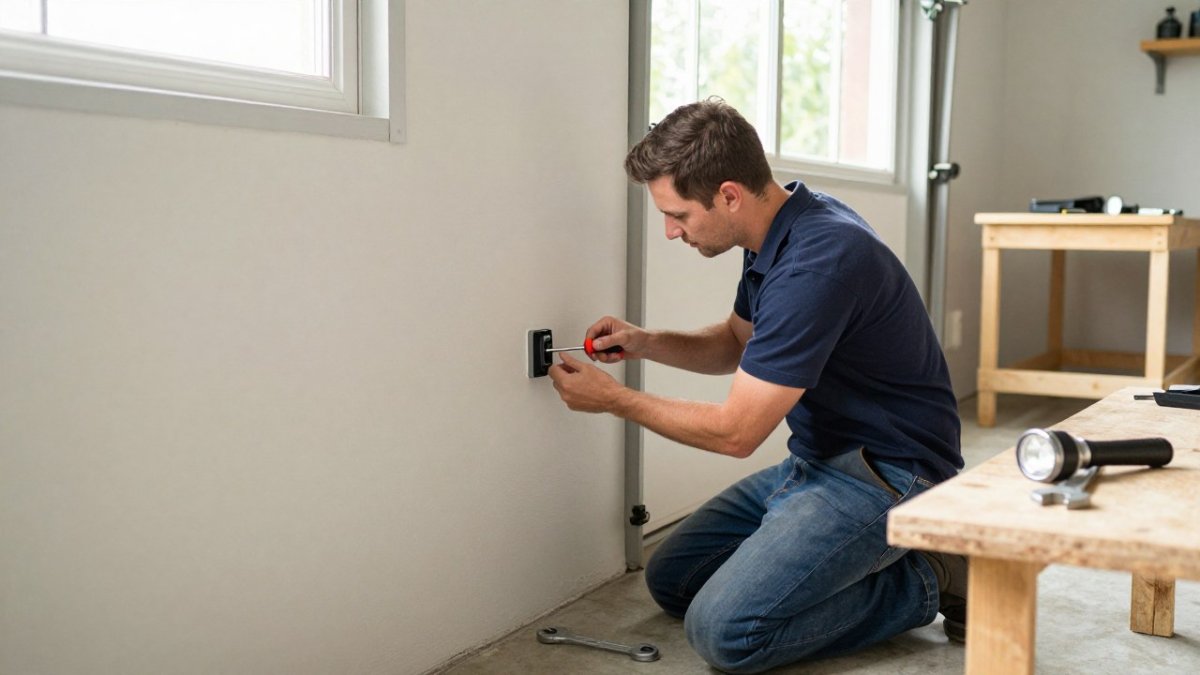
Start with the sensor lights. Every modern opener has two photo-eye sensors, one on each side of the door near the floor.
If both sensor lights are solid but the door still reverses, the problem is more likely in the opener's travel settings, the tracks, or the door's balance.
If you suspect the sensor is the culprit, contact Garage Door Connection for a quote.
Quick Comparison: Symptoms, Fixes, and When to Call a Pro
The table below maps each symptom to its most likely cause and the first fix to try. Use it as a starting point before you climb a ladder.
| Symptom | Most Likely Cause | First Fix | Call a Pro When |
|---|---|---|---|
| Door reverses immediately after touching the floor | Sensor misalignment or obstruction | Clean lenses, check alignment | Sensors are damaged or wiring is frayed |
| Door stops short of the floor | Close-limit setting too high | Adjust close-limit screw | Opener is old and limits won't hold |
| Door closes only while holding the wall button | Sensor fault or force setting | Check sensor lights, inspect path | Safety reverse fails the block test |
| One side of the door hits the floor first | Track or cable issue | Inspect tracks for debris | Cable is slack, frayed, or off the drum |
| Door reverses at random | Sunlight hitting the sensor | Shade the sensor lens | Fault returns after weather changes |
The pattern matters more than any single row. A door that reverses right at the floor is a sensor story. A door that stops a few inches high is a limit story.
Reading Sensor Indicator Lights and Blink Patterns
Before you touch anything, look at the two photo-eye units near the floor. A steady light on both means the beam is aligned and the path is clear. A blinking light on one usually means the beam is broken or the units are misaligned.
Blink patterns are model-specific, so do not assume every opener uses the same code. Check your opener's manual or the manufacturer's support page to interpret the blink pattern.
Watch out: do not unplug or rewire a sensor while the opener is powered. Turn the opener off at the wall control or the breaker before you inspect connections, and never bypass a sensor to force the door closed.
A Safe Test Sequence That Separates Opener Problems from Door Problems
A door that will not close all the way can be an opener fault or a door fault, and the two feel identical. Run this sequence in order.
- Clear the path and watch the sensor lights. Sweep the doorway, then watch both indicator lights while a helper presses the wall button. A blinking or dark light points to the sensor circuit.
- Test the safety reverse with a box. Place a box in the door's path and press the wall button. The door should reverse on contact. If it does not, stop and call a technician; the safety reverse is a life-safety feature.
- Disconnect the opener with the emergency release. Pull the release handle only when the door is fully closed and no one is under it. Lift the door by hand to about halfway. A balanced door stays put. A door that slams down or will not stay up has a spring or cable problem, not an opener problem.
- Run the opener with the door disconnected. If the opener carriage travels smoothly but the door binds by hand, the fault is in the door. If the carriage stutters or stops short, the fault is in the opener's travel or force settings.
- Reconnect and test the wall control. Press the wall button and watch where the door stops. A door that stops a few inches high points to the close-limit setting. A door that reverses at the floor points back to the sensor circuit.
Keep people and pets clear of the doorway during every test, and never stand under a moving door. If a step produces a result you cannot explain, stop and book a service call.
When Your Garage Door Won't Close All the Way and Goes Back Up
A door that reverses on contact is running its safety circuit. The opener is doing what it was designed to do: it sensed resistance or a broken beam and sent the door back up.
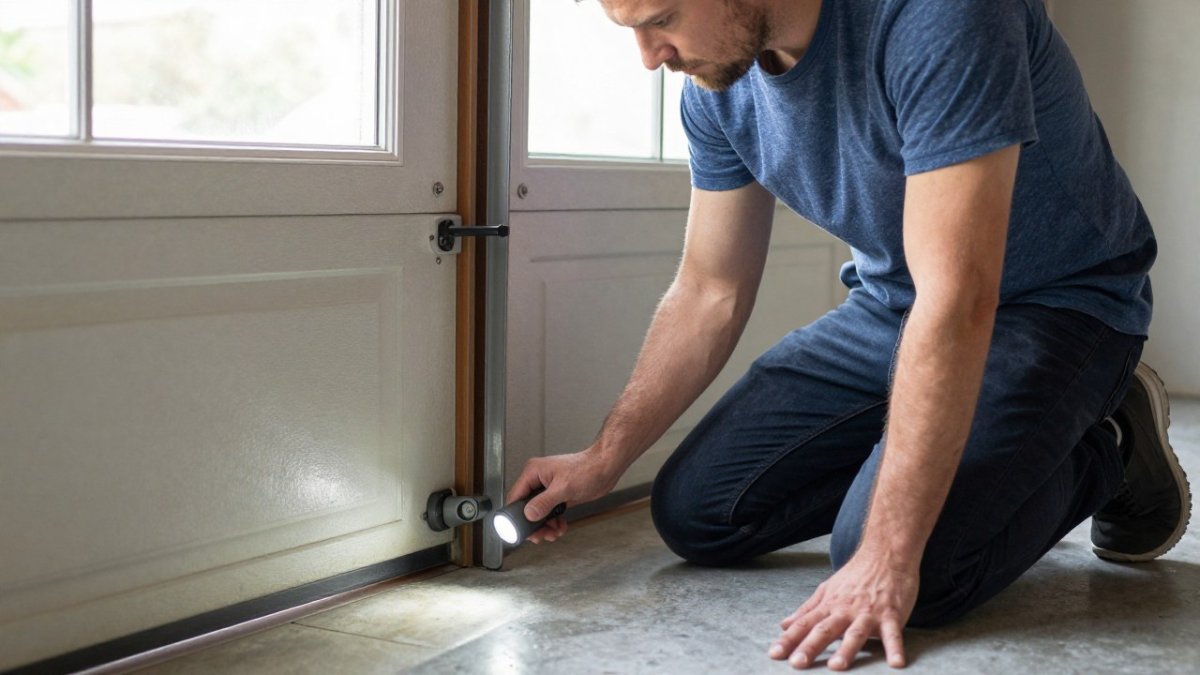
Work through this sequence in order:
- Clear the path. Sweep the door's path and check for a broom, toy, or box sitting in the beam.
- Clean the lenses. Wipe both sensor lenses with a soft cloth. Dust and cobwebs block the beam more often than people expect.
- Check alignment. Each sensor should point squarely at the other. Nudge one and watch its indicator light.
- Test the safety reverse. Place a box in the door's path and press the wall button. The door should reverse on contact. If it doesn't, stop and call a technician.
- Look at the wiring. Check that the small wires running to each sensor are intact and firmly connected.
A door that reverses often needs an opener reset, and our step-by-step reset guide walks through that process.
Garage Door Won't Close Unless I Hold the Button Down
When the door only closes while you hold the wall control, the opener is not receiving a clear signal that the path is safe.
Two things cause this. The first is a sensor that is misaligned, dirty, or wired backward. The second is a force setting that has drifted and is now too sensitive, so the opener reads normal resistance as an obstruction.
Check the sensor indicator lights first. If one is blinking, realign and clean that unit.
Watch out: turning the force screw too far disables the safety reverse. That is a serious hazard, especially in a home with children or pets.
Garage Door Not Closing All the Way Down on One Side
A door that lands unevenly is usually not an opener problem. The opener is pulling, but one side of the door is meeting more resistance than the other.
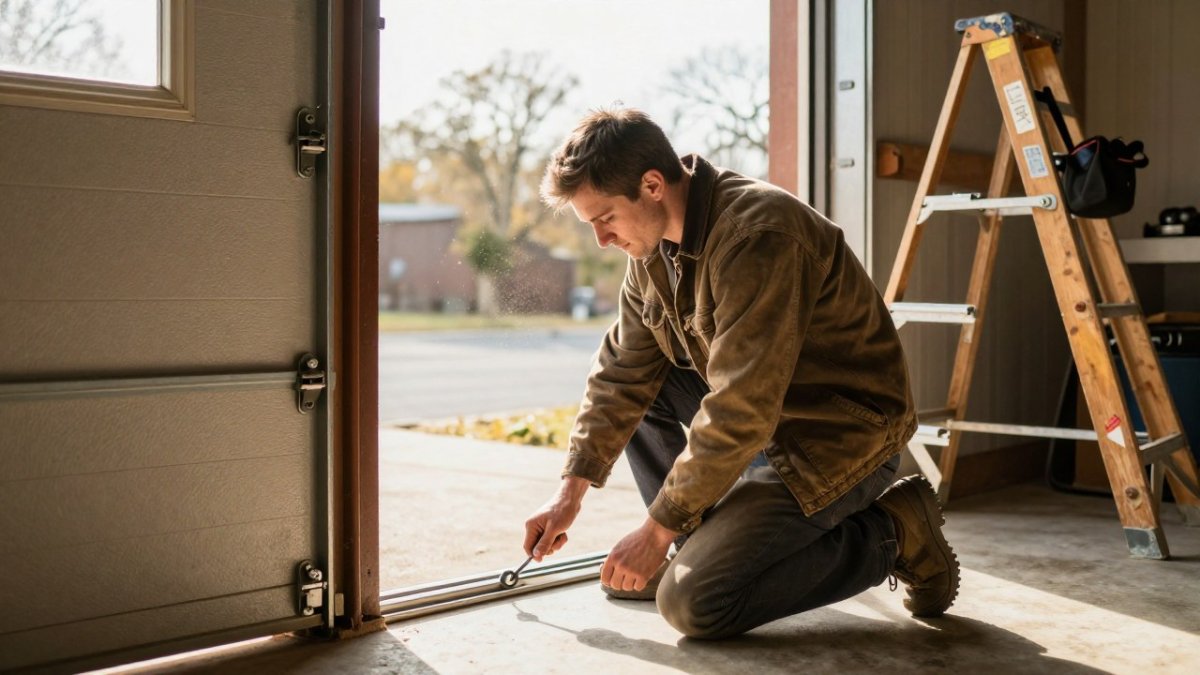
Common culprits include debris or damage in the tracks, a bent track section, worn rollers, or a cable that has jumped its drum.
Run this check:
- Inspect both tracks for dents, rust, and debris.
- Look at the rollers. Flat spots or cracked wheels mean replacement.
- Check the cables for slack or fraying.
If the door is unbalanced, stop using the opener. Forcing a heavy door with a strained spring puts stress on the motor and the cables.
How to Adjust a Garage Door to Close Completely
Adjusting a door to close completely starts with the close-limit setting on the opener, but the right adjustment depends on the symptom you are seeing.
Match the Symptom to the Adjustment
- Door stops a few inches above the floor and the opener light is steady. The close-limit setting is too high. The opener thinks the door has reached the floor and cuts power early.
- Door touches the floor and immediately reverses. This is usually the safety reverse or a sensor fault, not the close limit. Go back to the sensor lights before you touch the limit screw.
- Door closes only while you hold the wall button. This is a safety-circuit symptom. Holding the button overrides the safety circuit on many models, so the fix is in the sensors or the force setting, not the close limit.
Adjusting the Close-Limit Setting
On most openers, you will find two adjustment screws on the motor housing, one for open travel and one for close travel. Turn the close-limit screw a quarter turn at a time, then run a full cycle and watch where the door stops. Repeat until the door meets the floor without compressing the seal.
A few rules keep this safe:
- Never adjust the limit so the door presses hard into the floor. That strains the opener and the door.
- Test the safety reverse after every adjustment.
- If the door still stops short after several small turns, the problem is likely mechanical, not the setting.
When the Limit Will Not Hold
If the door closes correctly for a day or two and then stops short again, the limit screw is not the real problem. A worn drive gear, a slipping belt, or a logic board losing its travel memory are common culprits. On older openers, replacement is often the smarter spend than repeated adjustments. Garage Door Connection offers opener technology with smartphone control and battery backup.
When to Stop Troubleshooting and Book a Repair
Some problems are not DIY problems. Stop and call a technician if any of these apply:
- The door reverses even with clean, aligned sensors and a clear path.
- A cable is frayed, slack, or off the drum.
- A spring is broken or the door is too heavy to lift by hand.
Cables and springs are under high tension and cause serious injuries every year. The U.S. Consumer Product Safety Commission publishes safety guidance worth reading before any repair.
When you are ready to hand it off, our team handles opener repair and installation. If your door is stuck open right now, we offer 24/7 emergency garage door repair so your home isn't left exposed overnight. You can also contact us directly to schedule a visit.
A door that won't close all the way is usually a sensor or a limit setting, and both are fixable. The trick is diagnosing the right one before you start turning screws.
Frequently Asked Questions
What could be the reasons why my garage door isn't closing fully?
The most common reasons are misaligned or dirty safety sensors, an obstruction in the door path, debris or damage in the tracks, worn rollers adding resistance, and close-limit or force settings on the opener that stop travel early. A garage door opener relies on all of these working together, so check the sensors and tracks first, then review the limit settings. If the door is balanced and the tracks are clear but it still stops short, the opener's travel limits or the door's springs need attention from a technician.
Why won't my garage door close when nothing is blocking the sensors?
Even with a clear path, the photo-eye sensors can fail. Sunlight hitting the sensor lens, a loose wire, or a lens clouded with dust can interrupt the beam and make the door reverse. Check that both indicator lights on the sensors are solid, wipe the lenses, and shade them from direct sun. If one light flashes or stays dark, the sensor alignment or wiring is the issue, not an obstruction. A garage door opener with a persistent sensor fault needs a professional diagnostic.
Can I adjust the close-limit setting myself?
On most openers, yes. With the door closed, locate the limit adjustment screw or the up/down buttons on the motor unit, then follow the manufacturer's instructions for your model to extend the closing travel in small increments. Test after each change with the wall button, and keep the safety reverse test in mind: place a small object in the path and confirm the door reverses. If the door still stops short or crushes the object, stop and call a technician, since force settings and spring tension may be involved.
When should I stop troubleshooting and call a professional?
Stop DIY work if the door is unbalanced, a spring is broken, cables are frayed or loose, or the door slams down or reverses unpredictably. High-tension springs and cables can cause serious injury, so they are not a homeowner repair. Also call a pro if the opener's diagnostic light shows a code you cannot clear after checking sensors and tracks. Garage Door Connection offers rapid 24/7 emergency repairs.
Why does my garage door opener open the door but not close it?
An opener that opens but will not close usually points to a safety circuit problem. The photo-eye sensors are checked only during the closing cycle, so a misaligned, dirty, or sun-blinded sensor will block closing while leaving opening unaffected. A stuck wall control or a limit setting that stops travel early can also cause this. Test by holding the wall button: if the door closes only while held, the sensors are the likely culprit and need cleaning, realignment, or replacement.