 Ultimate guide
Garage Door Replacement Cost: 2026 Price Guide
Last Updated: November 7, 2026
Quick Summary
Garage door replacement cost in 2026 depends mostly on the door material and insulation, since the door itself is roughly half the equation and installation, removal, disposal, and hardware make up the rest. Steel is the most common material, while wood, aluminum, composite, and glass doors move toward the top of the range.
- Insulation earns its premium when your garage shares a wall with living space.
- A single door spans 8 to 9 feet wide; a double door runs 16 feet, sometimes 18.
- Ask your installer to price one wide door against two separate single doors.
- Confirm in writing whether springs, cables, and haul-away are inside the estimate.
- A 15-year-old door facing its second major spring repair is a replacement candidate.
Table of Contents
- What Drives Garage Door Replacement Cost in 2026
- One-Car Garage Door Replacement Cost: What to Expect
- Two-Car Garage Door Replacement Cost: Sizing Up the Numbers
- Garage Door Installation Cost: Labor, Removal, and Disposal
- Garage Door Repair vs. Replacement Cost: Which Makes Sense
- Hidden Costs and How to Compare Installation Estimates
- Get a Free Quote for Your Garage Door Replacement
- Frequently Asked Questions
What Drives Garage Door Replacement Cost in 2026
Garage door replacement cost is one of the few home exterior projects where the price range is genuinely enormous, and that spread confuses homeowners more than anything else. A garage door replacement project in 2026 can land anywhere from a modest budget upgrade to a custom architectural statement, and the difference comes down to a handful of decisions you make before anyone touches your tracks. Homeowners often find that the choices made before installation shape the bottom line more than labor alone.
Here is the core tension nobody explains well. The door itself is roughly half the equation, and installation, removal, disposal, and hardware make up the rest. Get the door spec right and the project stays predictable. Get it wrong and you pay twice.
Door Material and Insulation
Material sets the floor and ceiling of your budget more than any other choice. Steel garage doors are the most common option for good reason: they resist dents, hold paint well, and handle temperature swings without warping. Wood garage doors cost more and demand maintenance, but they deliver a look steel cannot match. Aluminum garage doors suit modern designs and coastal humidity but dent more easily. Composite garage doors sit in the middle, mimicking wood grain without the rot risk.
Insulation is the second lever. For a deeper comparison of materials and costs, see our guide on choosing the best garage door material for your home, and if energy performance is your priority, our article on insulated garage door benefits and energy savings breaks down what the upgrade actually delivers.
Size, Windows, and Custom Options
Door size drives material volume and labor time together. A single garage door typically spans 8 to 9 feet wide; a double garage door runs 16 feet, sometimes 18. Wider openings need heavier springs, more track, and often a second technician on site. Windows add cost through both materials and labor, and specialty glass, decorative inserts, or custom color matching push a standard door into custom garage door territory. Every window, every carriage-style overlay, and every nonstandard dimension adds a line to the estimate.
One-Car Garage Door Replacement Cost: What to Expect
One-car garage door replacement cost sits at the entry point of the market, and that is where most homeowners start their research. A single-car door is generally smaller and lighter than a double door, so the installation scope is typically simpler.
Insulation and window count are among the factors that can affect a quote. The door you touch every day should operate smoothly first and look good second.
Two-Car Garage Door Replacement Cost: Sizing Up the Numbers
Two-car garage door replacement involves more than size alone. A double garage door spans roughly twice the width, which means heavier panels, a beefier torsion system, and more labor hours per install. The two-car garage door replacement cost also depends on whether you are replacing one wide door or two separate single doors, since two openings mean two sets of tracks, springs, and openers.
Configuration matters as much as square footage. A 16-foot double door with a single torsion assembly is usually the more economical route than two 8-foot doors with separate hardware, but the two-door layout gives you flexibility if one side ever needs service. Ask your installer to price both configurations before you commit.
Garage Door Installation Cost: Labor, Removal, and Disposal
Garage door installation cost is a line item homeowners often misjudge. Removal and disposal alone take real time, especially on older doors with rusted fasteners that shear instead of backing out.
A useful way to think about labor is that it is priced by the hour in most markets, and the hours are driven by four things: door weight, opening condition, hardware condition, and whether the old door comes out cleanly. A like-for-like replacement of a standard single door in good framing is the fastest job. A double door with a failed torsion system, a rotted jamb, or a track that was installed out of plumb adds hours before the new door ever goes up.
Labor for a straightforward residential replacement varies by market and by how the installer structures the bid, so ask for a written estimate that reflects your specific opening. What matters more is that the estimate tells you which of these are included:
- Removal of the old door and hardware. Tracks, springs, cables, rollers, and hinges all come down, not just the panels.
- Disposal and haul-away. Old steel doors are heavy and awkward; some haulers charge by weight or by trip.
- New torsion springs and cables. Many installers replace these as standard on a full replacement because reusing 15-year-old springs on a new, heavier door is a callback waiting to happen.
- Track alignment and door balancing. A door that is not balanced will wear out its opener and its springs prematurely.
- Safety reverse testing. Required by the door operator standard and a genuine safety check, not a formality.
- Opener reconnection or replacement. If the old opener will not pair with the new door's weight or travel, this is a separate charge.
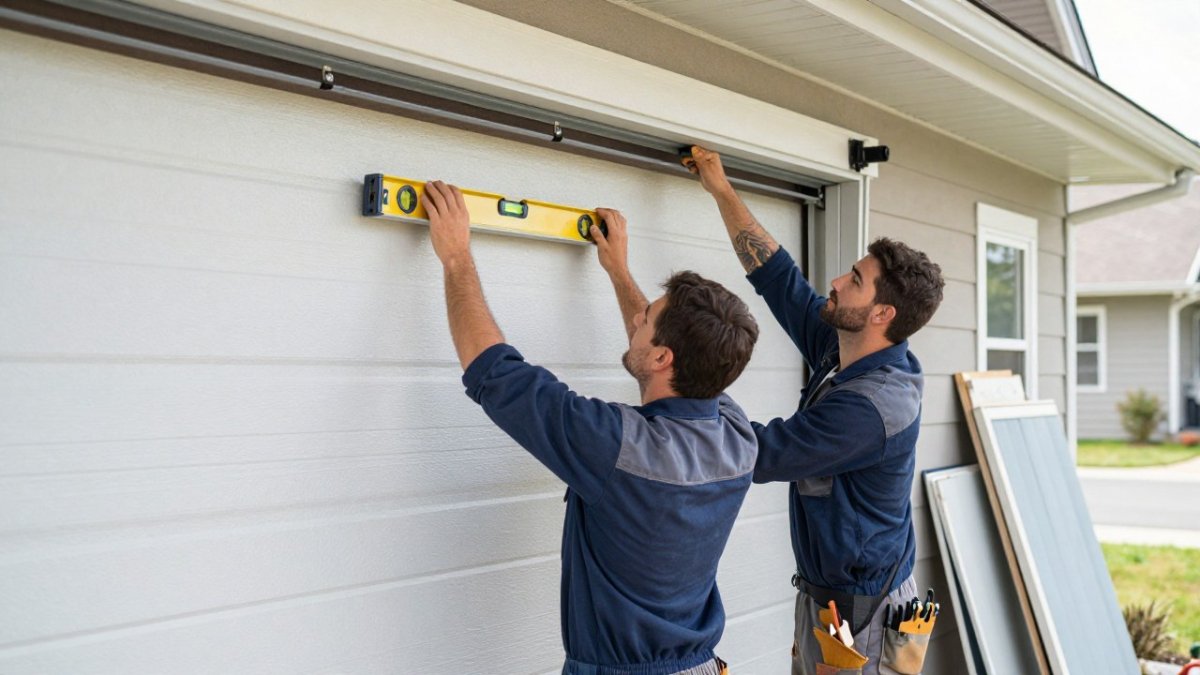
When comparing estimates, confirm in writing what each installation estimate includes, including whether springs, cables, and haul-away are inside the number or added on top.
Garage Door Repair vs. Replacement Cost: Which Makes Sense
Garage door repair vs. replacement cost is the decision that saves or wastes the most money, and the answer depends on what failed. A broken spring, a worn roller, or a misaligned track is a repair, full stop. A door with rusted-through panels, repeated spring failures, or a bent track that will not stay aligned is usually throwing money at a losing battle.
A useful rule of thumb: if repair costs approach a meaningful fraction of a full replacement and the door is past its service life, replacement may make more sense. A 15-year-old door facing its second major spring repair is a candidate for replacement, not another patch. If you are weighing a spring repair specifically, our garage door spring repair cost guide for Colorado covers what that job involves and how pricing works. Safety matters here too: torsion springs store dangerous energy, and spring replacement is not a DIY job.
Hidden Costs and How to Compare Installation Estimates
Hidden costs sink more garage door budgets than door choice does, and the reason is structural: a garage door replacement touches the opening, the hardware, the electrical, and the structure around it, and any of those can turn out to be worse than the visible door suggests.
The clearest way to see where your money goes is an itemized sample estimate. The structure below is the format to ask for, with placeholder amounts you replace with your own bids; the point is the line items, not the numbers.
| Line Item | What It Should State | Why It Matters |
|---|---|---|
| Door | Exact model, material, insulation R-value, color | Lets you compare like for like across bids |
| Labor | Flat rate or estimated hours, number of technicians | Reveals whether a low bid is short-staffed |
| Removal and disposal | Named separately, with haul-away included | The most commonly omitted charge |
| Springs and cables | New vs. reused, and cycle rating | Reused springs fail early on a heavier door |
| Tracks and hardware | New vs. reused, gauge of track | Thin track flexes and misaligns |
| Opener | Model, horsepower, belt vs. chain, battery backup | Often priced separately or omitted |
| Permits | Included, excluded, or not required | Varies by jurisdiction |
| Framing or structural repair | Allowance or hourly rate | The biggest source of overruns |
| Warranty | Manufacturer vs. workmanship, and term length | A one-year labor warranty is not the same as a limited lifetime door warranty |
When you compare installation estimates, line them up side by side and check five things. First, whether removal and disposal are included or added later. Second, whether the opener is priced separately and whether it is sized for the new door's weight. Third, what warranty covers labor versus materials, and for how long each runs. Fourth, whether the quote specifies the exact door model, insulation rating, and spring cycle life rather than a generic description. Fifth, whether permits and any framing allowance are stated or explicitly excluded.
A vague quote is not a cheaper quote; it is an incomplete one. The bid that names every line is the one you can actually compare, and it is also the one that is hardest to inflate after the fact.
Replacement also protects resale value, and our article on how a new garage door boosts curb appeal explains what buyers notice. For a transparent, itemized estimate from a local team, request a free quote for your garage door replacement and we will walk your opening, measure it, and put every line in writing.
Get a Free Quote for Your Garage Door Replacement
The gap between a fair garage door replacement cost and an inflated one is rarely the door. It is the clarity of the estimate. Homeowners who get itemized quotes, confirm what removal and disposal include, and match the door spec to how they actually use the garage consistently land on better numbers than those who chase the lowest headline price.
If you are ready to replace a worn door with one built for Colorado winters and temperature swings, Garage Door Connection offers professional garage door services, including solutions designed for Colorado's climate, opener technology with smartphone control and battery backups, and personalized communication. Get started with Garage Door Connection and replace your garage door with a quote you can actually read line by line.
Frequently Asked Questions
Does garage door replacement cost include installation?
Most professional quotes bundle the door, hardware, tracks, and standard installation labor into one installed cost, so the number you see usually includes installation. Ask the contractor to itemize the door, labor, removal, and disposal separately so you can see what you are paying for. If a quote excludes opener work, permit fees, or hauling away the old door, those become add-on costs. A written, itemized estimate is the clearest way to compare garage door replacement cost between contractors.
Is it cheaper to repair or replace a garage door?
A single broken spring, cable, roller, or opener repair usually costs far less than a full replacement, so repair wins when the door panels and structure are sound. Replacement makes more financial sense when the door is 15 or more years old, panels are dented or rusted, or repeated repairs pile up. Weigh the garage door repair vs. replacement cost against the door's remaining lifespan. If repairs approach a large share of a new door's price, replacement delivers better long-term value.
How much is a 16-foot garage door installed?
A 16-foot door is the standard double-car width, and its installed cost depends on material, insulation, window options, and local labor rates. A basic uninsulated steel door sits at the low end, while insulated three-layer steel, wood, or composite doors push the two-car garage door replacement cost higher. Glass and aluminum full-view designs cost the most. Get a written estimate that lists door size, R-value, and labor so the 16-foot price is comparable across quotes.
What factors affect the cost of a new garage door?
Material, size, insulation R-value, window and specialty glass options, color and style, and whether you add a new opener all move the garage door installation cost. Labor rates vary by region, and older homes may need track, header, or framing adjustments that add to the project. Removal and disposal of the old door is another line item. Insulated doors cost more upfront but can improve energy performance and comfort in attached garages, which matters in cold climates.