 Listicle
Garage Door Security Tips for Homeowners
Last Updated: November 14, 2026
Quick Summary
Good garage door security starts with reinforcing the door between the garage and your home and protecting the emergency release cord. Add a manual slide lock that bolts through the track, keep the door closed, and secure your smart opener account with a strong password and multifactor authentication.
- Replace a hollow-core garage entry door with a solid-core or metal door and a reinforced deadbolt strike plate.
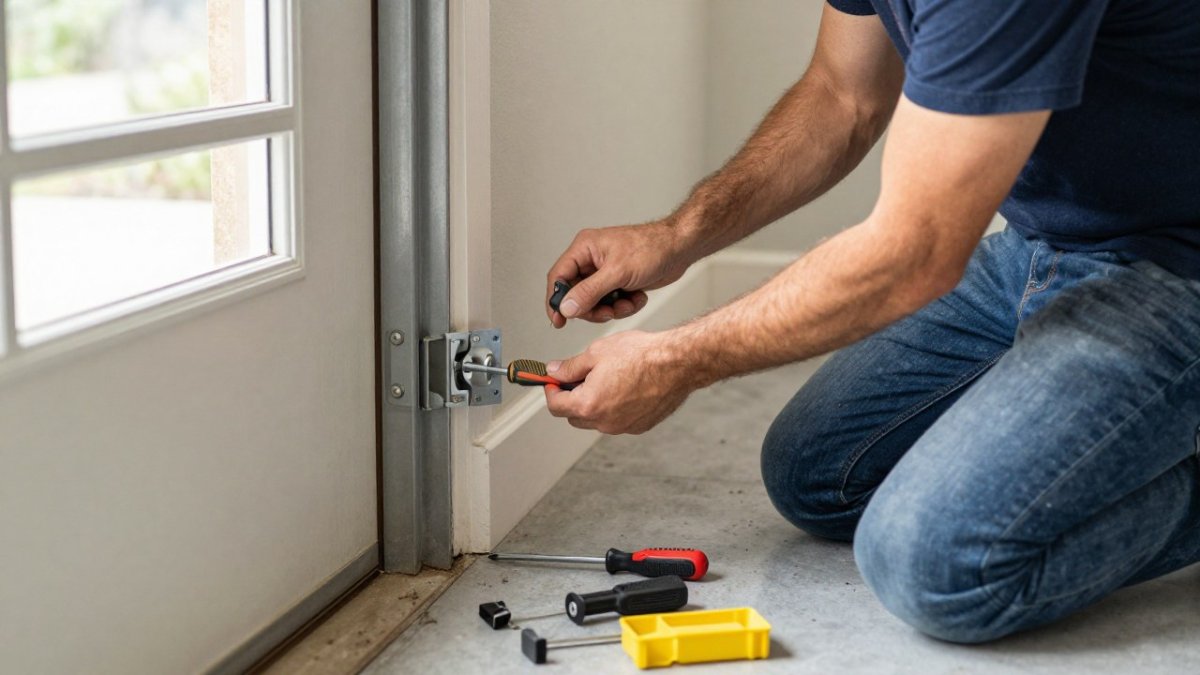
- A manual slide lock physically blocks the door from rolling up even if someone defeats the opener.
- Keep opener remotes out of sight, never leave one in a vehicle, and change the access code after a move-in or lost remote.
- Turn on multifactor authentication and remove old shared users from the smart opener app.
- After a suspected break-in, reset the opener and clear all old remotes and codes.
Table of Contents
- Why Your Garage Is the Weakest Point in Your Home Security
- How to Secure Your Garage Door from the Inside
- Choosing the Right Garage Door Lock for Your Setup
- How a Garage Door Security Bar Adds a Second Line of Defense
- How to Secure a Garage Door from the Outside
- Smart Openers, Cameras, and Monitoring That Actually Deter Thieves
- What to Do After a Suspected Break-In or Compromised Opener
- Book a Security and Safety Inspection with Garage Door Connection
- Frequently Asked Questions
Why Your Garage Is the Weakest Point in Your Home Security
Your garage is the most vulnerable entry point in your home, and most homeowners leave it exposed without realizing it. The garage door is the largest moving object on the house, and it is often the least reinforced. A thief can slip under a partially open door, pop a weak lock, or walk in through an unlocked side door in seconds.
Homeowners often invest in alarm systems and cameras for the front door and leave the garage wide open. Burglary remains one of the most common property crimes nationwide, and forced entry through garages is a recurring method.
Below, we'll show you exactly how to close that gap, from a manual slide lock you can install today to smart openers that alert your phone. The strategies here focus on what actually stops a thief, not what looks good on a product box.
How to Secure Your Garage Door from the Inside
Securing your garage door from the inside starts with two priorities: reinforcing the door that connects the garage to your home, and protecting the emergency release. These interior defenses matter most because they stop a thief who has already gotten past the outside.
Reinforce the Garage Entry Door
The door between your garage and your living space is a favorite target. It is often a hollow-core door with a basic lock, and a solid kick can split it open. Replace it with a solid-core or metal door and install a deadbolt with a reinforced strike plate.
Protect the Emergency Release Cord
The emergency release cord is a safety feature, but it is also a break-in tool. A thief can slip a wire through the gap at the top of the door, hook the cord, and disengage the opener.
Protecting the emergency release is a matter of keeping it usable in an emergency but unreachable from the driveway.
Choosing the Right Garage Door Lock for Your Setup
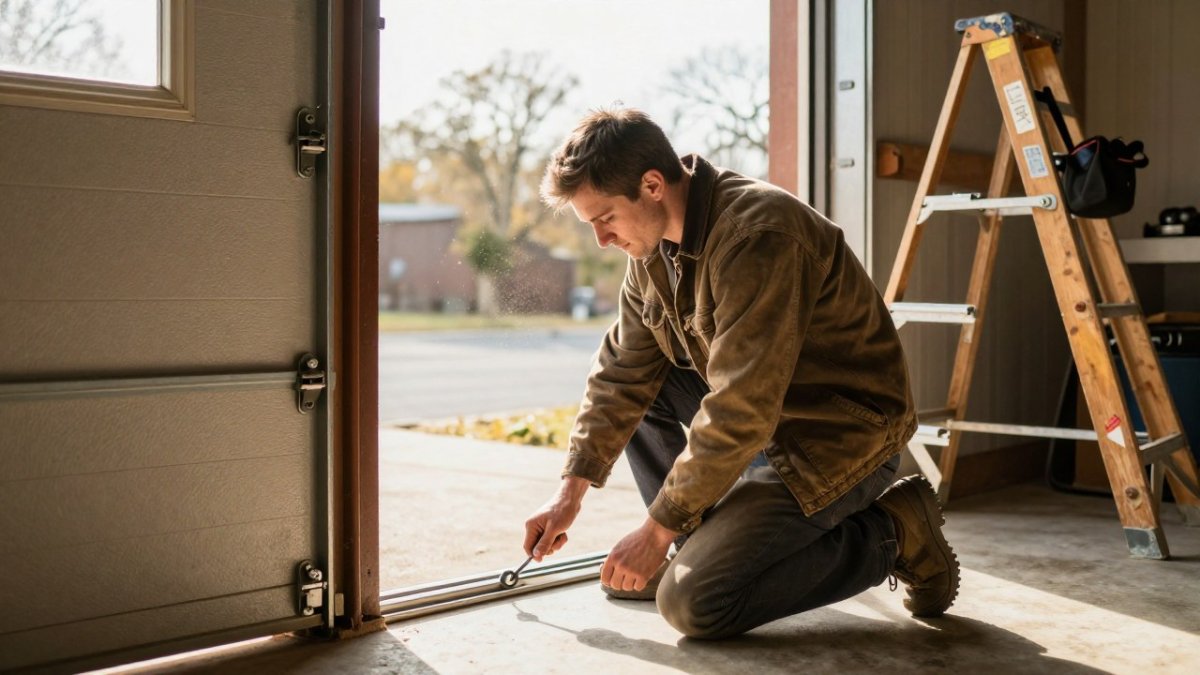
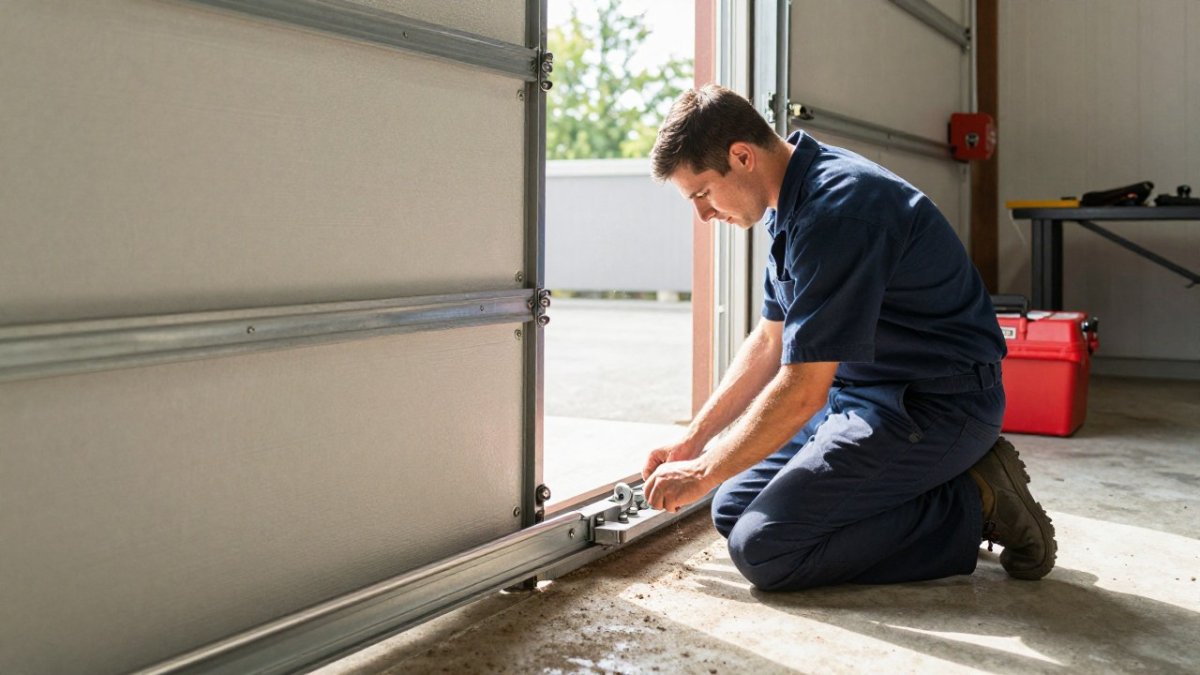
The right garage door lock depends on your door type, whether you have an automatic opener, and how you use the garage day to day. A manual slide lock is the simplest and most reliable choice for most homes because it bolts through the track and physically blocks the door from rolling up, even if someone defeats the opener. But it is not the right answer for every door, and picking the wrong lock can damage the opener or leave the door unsafe.
Start by identifying what you have. A sectional door with a trolley-style opener needs a lock that either pairs with the opener or mounts so the door cannot be forced while the opener is engaged. A one-piece tilt-up door or a detached garage without an opener is a better candidate for heavy-duty side bolts. A roll-up door on a detached garage has different track geometry and usually takes a slide lock or a dedicated roll-up lock rather than a bar across the panels.
| Lock Type | Best For | Key Trade-off |
|---|---|---|
| Manual slide lock | Most sectional doors, low cost | Must be set by hand each time |
| Opener-integrated lock | Doors with automatic openers | Requires a compatible opener and wiring |
| Side bolt locks | Detached garages, doors without openers | Two locks to manage, one on each side |
| Smart lock | Keyless entry and monitoring | Needs power, a network, and account security |
Manual Slide Lock
A manual slide lock is a mechanical option that does not depend on electronics. The trade-off is that someone has to set it by hand, and it must be released before the opener is used.
Opener-Integrated Lock
An opener-integrated lock is wired to the opener, so it can reduce the chance of leaving a manual lock engaged. It requires a compatible opener, so check the opener model before buying.
Side Bolt Locks
Side bolt locks are another option for detached garages and doors without openers. The trade-off is two locks to manage.
Smart Lock
A smart lock replaces the keyed entry with a keypad or app control. It adds an account and a network connection that should be secured, much like the opener account.
Matching the Lock to the Door and Opener
Before you buy, confirm three things: the door type (sectional, tilt-up, or roll-up), whether an opener is installed and what model it is, and whether the door has a side entry that changes the threat model. A lock that fights the opener is worse than no lock at all, and a lock that only covers one side of a detached garage leaves the other side open. If you are unsure, a professional inspection can help confirm which lock fits your door.
How a Garage Door Security Bar Adds a Second Line of Defense
A garage door security bar is a physical barrier that can block the door from opening, which provides protection beyond the opener itself.
How to Secure a Garage Door from the Outside
Securing a garage door from the outside comes down to removing easy opportunities, such as leaving the door open or keeping a remote in the car.
- Keep the garage door closed when it is not in use, even for a quick errand.
- Lock the garage door and use a manual slide lock overnight.
- Keep opener remotes out of sight and never leave one in a vehicle.
- Use a keychain remote instead of a remote clipped to the sun visor.
- Change the opener access code after any move-in or lost remote.
Remotes, Codes, and the Keychain Remote Habit
A remote left in a vehicle can give a thief access to the garage. Carry a keychain remote on your person instead, and keep the car remote hidden and off the visor.
Change the access code on a rolling-code opener whenever a remote goes missing. If you use a smartphone app for access, review the security settings so old devices are removed. Our guide to smartphone garage door app safety walks through locking down app access step by step.
Smart Openers, Cameras, and Monitoring That Actually Deter Thieves
Smart openers and cameras can deter thieves by removing surprise and time from the equation. A smart opener is also a networked device, so the account behind it is part of your home security.
A smart garage door opener can let you open, close, and monitor the door from your phone. Pairing it with a motion-activated light and a camera aimed at the driveway can add visibility.
Secure the Smart Opener Account
The opener account is the front door to your garage in the digital sense. Treat it that way:
- Use a strong, unique password that you do not reuse on any other site. A password manager makes this practical.
- Turn on multifactor authentication if the app offers it, so a stolen password alone is not enough.
- Review shared users regularly and remove anyone who no longer needs access, including former roommates, contractors, and old devices.
- Keep the opener app and the opener firmware updated, because updates often close security holes.
- Check the app's notification settings so you actually see door-open alerts rather than silencing them.
Cameras and Monitoring
A camera aimed at the driveway and the garage door can provide a record of activity. Motion-activated lighting and recording both help, since the light can deter and the recording can help after the fact.
Battery Backup and Power Outages
Confirm your opener has a battery backup so the door can still work during a power outage.
If you are weighing an upgrade, our overview of why to upgrade to a smart garage door opener covers the security and convenience benefits. When you are ready, we handle garage door opener repair and installation so the new unit is wired and calibrated correctly, and we can confirm the battery backup and sensor alignment at the same visit.
What to Do After a Suspected Break-In or Compromised Opener
If you suspect a break-in or a compromised opener, act in this order: secure the property, then reset access, then repair the door. Do not wait to see if the problem repeats.
- Check the door, tracks, and lock for damage before using the opener.
- Call emergency services if there is evidence of forced entry.
- Reset the opener and clear all old remotes and codes.
- Change the access code and remove unknown devices from the app.
- Add a camera or light if none is in place.
Our step-by-step guide on how to reset a garage door opener shows how to clear old codes so a stolen remote stops working. If the door itself is damaged or jammed, call for 24/7 emergency garage door repair so the opening is secured the same day.
Book a Security and Safety Inspection with Garage Door Connection
A security inspection can help find weak points before a thief does. Garage Door Connection is known for fair and honest prices, offers rapid 24/7 emergency response, safe spring replacement using specialized equipment, and opener technology with smartphone control and battery backups. Our solutions are designed to withstand the Colorado climate.
You do not have to guess whether your garage is secure. Get started with Garage Door Connection and get a free quote.
Your garage does not have to stay the weak link. A reinforced entry door, a protected release, a security bar, and a smart opener with monitoring close the gaps a thief looks for. Let Garage Door Connection inspect your door and hardware, recommend the right upgrades, and install them with honest pricing and 24/7 support. Get a free quote and secure your garage this week.
Frequently Asked Questions
How do I secure my garage door from the inside?
Start with the door between the garage and the house, since it is a common entry point. Keep the garage door closed and locked whenever it is not in use, and avoid storing remotes in a car parked in the driveway.
Can a garage door security bar help prevent break-ins?
A physical lock or bar can add protection because it works independently of the opener. If you are unsure which type fits your door, a professional can advise you.
What should I do if I think my garage door opener was compromised?
Change the access code on any keypad and update the password on any smart opener account. Check the door and tracks for signs of forced entry, and consider a professional inspection before you use the door again.
How do I keep my garage secure during a power outage?
A battery backup on the opener can keep the door working when the power fails. Keep a keychain remote or key with you so you are not stranded outside.